


3 Things to Check Before Buying an Oxygen Concentrator
CODE
Shopping for an oxygen concentrator can feel confusing, especially when different models offer various features, oxygen delivery methods, and power options. Should you choose a lightweight portable machine or a home oxygen concentrator? Do you need continuous flow or pulse-dose oxygen? And how much battery life is enough for your daily activities?
Before exploring oxygen concentrator deals, it's important to understand what you actually need. Comparing specifications without considering your oxygen requirements can make choosing the right equipment more difficult.
The good news is that you don't need to compare dozens of features to get started. Before buying an oxygen concentrator, focus on three important things: oxygen flow requirements, daily routine, and battery and power options.
Let's explore each one and look at three VARON oxygen concentrators that offer different features for different usage preferences.
Check Your Oxygen Flow Requirements
Before comparing prices, weight, or battery life, start with one important question:
Do you need continuous-flow or pulse-dose oxygen delivery?
These two delivery methods work differently. Understanding their differences is essential when choosing an oxygen concentrator that matches your prescribed oxygen requirements.
Continuous Flow: A Steady Supply of Oxygen
A continuous-flow oxygen concentrator delivers a steady stream of oxygen while the machine is operating.
Its output is measured in liters per minute (L/min). For example, if your prescribed setting is 3 L/min, you need equipment capable of providing the required oxygen output at that setting.
Continuous-flow models are commonly considered by people who require a steady oxygen supply, including some individuals who use oxygen while resting or sleeping.
However, there is one important detail to remember: a machine's maximum flow rate does not automatically mean it maintains the same oxygen concentration at every setting.
Some concentrators produce lower oxygen concentrations as the flow rate increases. Always check the oxygen concentration at the flow rate you actually need.
Pulse Flow: Oxygen Delivered When You Inhale
Pulse-dose oxygen concentrators work differently. Instead of providing a continuous stream, they detect inhalation and deliver a measured amount of oxygen.
This delivery method is commonly found in smaller, lightweight portable oxygen concentrators.
However, one detail many shoppers overlook is that a pulse setting of 3 is not equivalent to 3 L/min of continuous flow.
Pulse settings are not interchangeable with continuous-flow measurements. Their oxygen delivery also varies between brands and models.
Before choosing a pulse-dose concentrator, confirm that its delivery method and settings are appropriate for your prescribed oxygen requirements.
Before You Buy: Check your prescribed oxygen delivery method and settings first. If you're considering switching from continuous flow to pulse flow, consult a qualified healthcare professional to determine whether the alternative is appropriate, including during physical activity or sleep when relevant.
Think About How You'll Use It Every Day
Once you understand your oxygen delivery requirements, think about your typical daily routine.
Do you spend most of your time at home? Do you regularly go shopping, visit family, or spend time outdoors? Or do you want equipment that is easier to carry during car trips?
Your answers can help you decide between a portable and home oxygen concentrator.
If You Go Out Often: Consider a Portable Oxygen Concentrator
A portable oxygen concentrator may be more convenient if you're frequently away from home.
These machines are generally designed with portability in mind, offering features that make carrying and operating the equipment easier.
When comparing portable models, consider:
-
Weight and design: Look for a manageable weight and a comfortable carrying bag.
-
Controls: Simple buttons and an easy-to-read display can make operation more convenient.
-
Battery: Check whether the machine has a removable or rechargeable battery.
-
Power options: Some models support compatible AC and DC power sources.
For example, a compact pulse-dose machine may be convenient for shopping or visiting family, provided its oxygen delivery meets your prescribed requirements.
However, don't choose a machine simply because it is the lightest. A slightly heavier model that provides the required oxygen delivery may be a better option than a lighter one that cannot meet your needs.
If You Mostly Stay at Home: Consider a Home Oxygen Concentrator
If most of your oxygen use happens indoors, a home oxygen concentrator may be more suitable.
Instead of focusing primarily on battery weight, you may want to prioritize features that support convenient everyday operation.
Consider looking for:
-
Adjustable continuous oxygen flow.
-
Quiet operation for residential environments.
-
Easy-to-read displays and straightforward controls.
-
Wheels for easier movement between rooms.
-
Humidification or nebulizer features on selected models.
Some home oxygen concentrators also combine multiple convenient functions in one machine.
Before You Buy: Think about where you will use your concentrator most often. Choose features that make your daily routine easier without compromising your prescribed oxygen requirements.
Make Sure the Battery and Power Options Fit Your Plans
If you're considering a portable oxygen concentrator, battery life is another important factor.
Imagine you're planning an afternoon outing with your family. Your portable concentrator advertises up to five hours of battery operation. Does that mean it will always last five hours?
Not necessarily.
Battery runtime can change depending on the oxygen setting, breathing pattern, battery condition, and other operating conditions.
That's why it's important to look beyond the maximum advertised runtime.
How Much Battery Life Do You Really Need?
Start by considering how long you're usually away from an electrical outlet.
For short errands, one battery may be convenient. For longer outings, an additional compatible battery could provide more flexibility.
If you frequently travel by car, a compatible DC car adapter may also be useful.
However, remember that advertised battery life represents a maximum under specified conditions. Actual runtime may vary depending on how the machine is operated.
Understand the Three Common Power Options
Many portable oxygen concentrators support different power options depending on their design.
|
Power Option |
What It Does |
|---|---|
|
Rechargeable Battery |
Allows portable operation away from an electrical outlet. |
|
AC Home Power |
Powers the concentrator through a compatible wall outlet. |
|
DC Car Power |
Allows operation using a compatible vehicle power source. |
Not every product package includes the same accessories. Before ordering, check whether the battery, AC adapter, DC car charger, and carrying bag are included.
Before You Buy: Compare battery runtime at your intended oxygen setting. If you regularly spend extended periods away from home, consider a suitable backup battery or power option rather than relying only on the advertised maximum runtime.
Which VARON Oxygen Concentrator Fits Your Needs?
Once you've checked your oxygen requirements, daily routine, and power needs, comparing actual models becomes much easier.
At TTLife, three VARON oxygen concentrators illustrate the differences between portable continuous flow, lightweight pulse-dose delivery, and home oxygen support.
VARON NT-06: Portable Continuous Flow
Looking for continuous-flow oxygen delivery in a portable design?
The VARON NT-06 offers adjustable continuous flow from 1–6 L/min, together with a removable rechargeable battery and multiple power options.
It may be worth exploring if you require continuous-flow delivery and want the flexibility to take your equipment outside the home.
Key features:
-
Adjustable continuous flow: 1–6 L/min.
-
Oxygen concentration: 93% ±3% at 1 L/min.
-
Removable 114Wh (5200mAh) battery.
-
Up to 2 hours of battery operation.
-
Lightweight carrying bag with shoulder straps.
-
Noise level: ≤45 dB(A).
-
Touch controls and remote control.
-
AC, DC, and battery power options.
Keep in mind that its advertised oxygen concentration of 93% ±3% applies at 1 L/min. Oxygen concentration decreases at higher flow settings, so check the output at your required flow before choosing this model.

VARON VP-8 Lite: Lightweight Pulse-Dose Portability
Prefer something lighter to carry?
The VARON VP-8 Lite weighs approximately 4.4 lbs and offers seven adjustable pulse-dose settings.
Its compact design and rechargeable battery make it an option worth considering for everyday outings, provided pulse-dose delivery is appropriate for your oxygen requirements.
Key features:
-
Adjustable 1–7 pulse-dose settings.
-
Oxygen concentration: ≥90% rated.
-
Breath-synchronized oxygen delivery.
-
Approximately 4.4 lbs.
-
Up to 5 hours of operation with one battery.
-
Optional two-battery package offering up to 10 hours.
-
Noise level: ≤40 dB at level 1.
-
AC and DC power options.
Its lightweight construction and optional additional battery offer added convenience for users who prioritize mobility.
Remember that pulse-dose delivery is different from continuous flow. Confirm that this delivery method meets your prescribed oxygen requirements before purchasing.

VARON Serene 5: Continuous Flow for Home Use
Need a concentrator that stays mostly at home?
The VARON Serene 5 offers adjustable continuous-flow oxygen delivery from 0.5–5 L/min, with a rated oxygen concentration of 93% ±3%.
It also includes several convenient features designed to make everyday operation easier.
Key features:
-
Continuous oxygen flow: 0.5–5 L/min.
-
Oxygen concentration: 93% ±3% rated.
-
Quiet operation: ≤43 dB(A).
-
Built-in nebulizer function.
-
Large humidification bottle.
-
Clear LCD display.
-
Four swivel wheels and convenient handle.
-
Compatible with appropriately configured CPAP/BiPAP setups.
Its four wheels make moving the machine between rooms more convenient, while the LCD display provides easy access to operating information.
For people who primarily use oxygen at home, these features may make everyday equipment management more convenient.
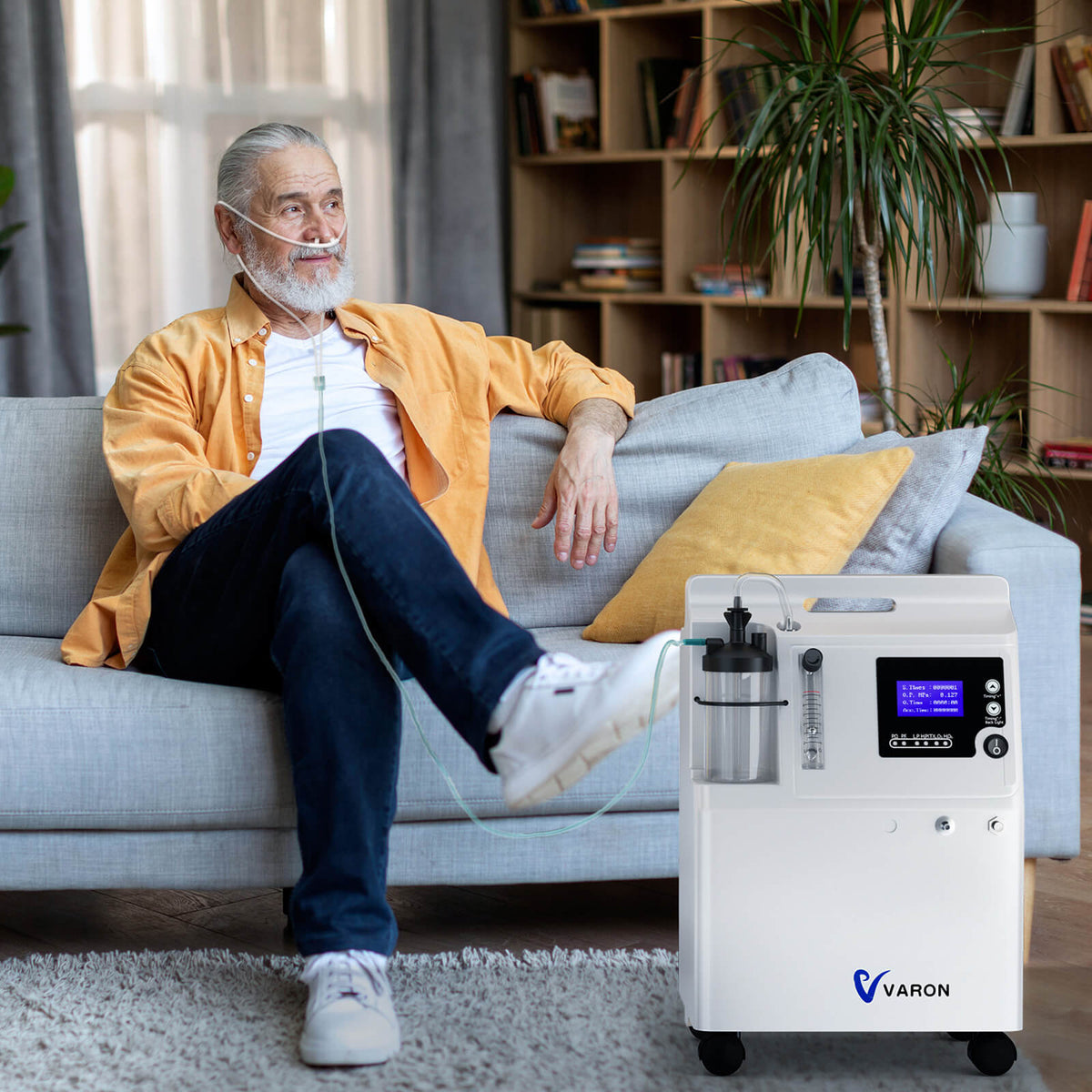
NT-06 vs. VP-8 Lite vs. Serene 5: Quick Comparison
Not sure which model to explore first? Here's a simple side-by-side comparison of their main specifications.
|
|
|
|
|
|---|---|---|---|
|
Feature |
|||
|
Type |
Portable |
Portable |
Home |
|
Oxygen Mode |
Continuous |
Pulse-dose |
Continuous |
|
Flow Settings |
1–6 L/min |
1–7 pulse settings |
0.5–5 L/min |
|
Oxygen Concentration |
93% ±3% at 1 L/min |
≥90% rated |
93% ±3% rated |
|
Battery Runtime |
Up to 2 hours |
Up to 5 hours |
Outlet powered |
|
Weight |
7.9 lbs |
Approx. 4.4 lbs |
Not specified |
|
Noise Level |
≤45 dB(A) |
≤40 dB at level 1 |
≤43 dB(A) |
|
Power Options |
AC/DC/Battery |
AC/DC/Battery |
AC |
|
Portability |
Carrying bag |
Lightweight design |
Four wheels |
|
Warranty |
1 year |
1 year |
1 year |
|
Main Advantage |
Portable continuous flow |
Lightweight pulse flow |
Convenient home use |


Note: Battery runtime depends on operating conditions. Oxygen concentration and actual delivery performance must be checked at your required settings. Pulse-dose settings are not equivalent to continuous-flow L/min. Product packages and included accessories may vary.
A Quick Way to Narrow Your Options
-
NT-06: Explore this model if portable continuous-flow delivery is your priority.
-
VP-8 Lite: Consider this model if you need a lightweight machine and pulse-dose oxygen meets your requirements.
-
Serene 5: Take a closer look if you prefer continuous-flow equipment for regular home use.
Remember, these are starting points for comparison, not substitutes for checking whether a device can meet your prescribed oxygen needs.
One More Thing: Don't Forget the Warranty and Return Policy
Finding the right features matters, but so does knowing what happens after your purchase.
Before placing an order, take a moment to check the warranty, return policy, and what's included in your chosen package.
TTLife offers:
-
One-year warranty on its oxygen concentrators.
-
30-day return policy, subject to applicable terms and conditions.
-
Product support and information about available accessories.
It's also worth reviewing accessory coverage, return conditions, and any fees that may apply.
Understanding these details can help you make a more informed purchasing decision.
Black Friday Early Access: A Good Time to Compare Your Options
With 2026 Black Friday Early Access, you can explore special offers on selected VARON oxygen concentrators at TTLife.
But remember: the best deal isn't simply the lowest price. It's equipment that meets your oxygen requirements and fits your everyday routine.
TTLife also offers a 60-Day Price Guarantee on eligible purchases, subject to the promotion's terms and conditions.
Whether you're comparing portable models or looking for a home oxygen concentrator, take your time to review the specifications before ordering.

Frequently Asked Questions
Q1. Can I replace my continuous-flow concentrator with a pulse-dose model?
Not automatically. Pulse settings and continuous-flow rates are not interchangeable. A pulse-dose device needs to be evaluated against your prescribed oxygen requirements before making the switch. Consult a qualified healthcare professional before changing equipment.
Q2. Is a portable oxygen concentrator suitable for overnight use?
It depends on the device, its oxygen delivery mode, and your prescribed requirements during sleep. Some users require continuous flow overnight, and not every portable model is suitable for that purpose. Confirm nighttime suitability before purchasing.
Q3. Can I use my oxygen concentrator while traveling by car?
Some portable models support compatible DC car power, including the VARON NT-06 and VP-8 Lite. Check the included accessories and vehicle power requirements before using the equipment.
Q4. Is the lightest oxygen concentrator always the best choice?
No. Weight is important for portability, but oxygen delivery, battery runtime, and compatibility with your requirements should come first.
Q5. How long does a portable oxygen concentrator battery last?
Battery runtime varies by model, operating setting, battery condition, and usage conditions. For example, the VP-8 Lite offers up to five hours of operation with one battery under specified conditions.
Q6. What should I check before buying an oxygen concentrator?
Focus on three main things:
-
Oxygen delivery requirements: continuous flow or pulse-dose.
-
Daily routine: primarily home use or portable use.
-
Battery and power options: runtime, AC power, and compatible DC power.
Also review the warranty, return policy, and included accessories before ordering.
Ready to Find Your Oxygen Concentrator?
Before buying, remember these three simple checks:
-
Oxygen Flow: Do you need continuous flow or pulse-dose delivery?
-
Daily Routine: Will you use your concentrator mainly at home or while you're out?
-
Battery and Power: Do you have the runtime and power options you need?
Once you understand these three factors, comparing different oxygen concentrators becomes much easier.
Explore the available options, compare the specifications, and find a model that fits your equipment requirements and everyday routine.
Compare VARON Oxygen Concentrators
Shop 2026 Black Friday Early Access Deals
Important Medical Disclaimer
Oxygen concentrators are healthcare devices designed to provide supplemental oxygen for users who require oxygen support. Oxygen needs, delivery methods, and equipment settings should always follow recommendations from a qualified healthcare professional.
This article is for informational purposes only and does not replace professional medical advice, diagnosis, or treatment. Consult a qualified healthcare professional regarding oxygen requirements, device selection, and appropriate settings.